
Practical laboratory training and professional development for stronger skills, safer practices, better equipment performance and improved laboratory operations.
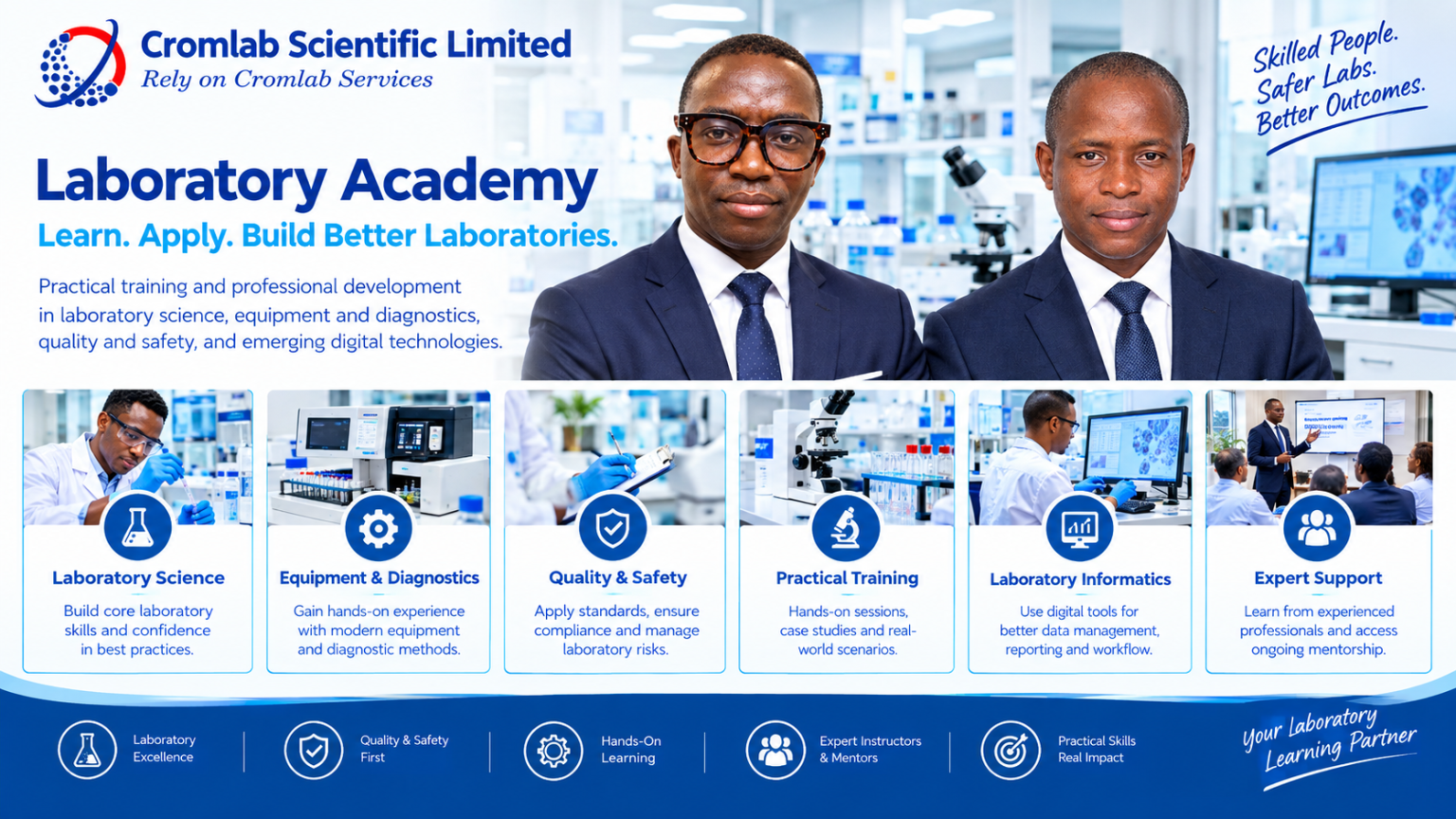
CROMLAB Laboratory Academy provides practical, applied learning programmes designed to strengthen laboratory professionals, researchers, technicians, students and institutional teams across the laboratory lifecycle. Training focuses on laboratory science and techniques, equipment operation and diagnostics, biosafety and quality management, specimen and sample management, laboratory documentation, reagents and consumables, maintenance and troubleshooting, and laboratory management and performance improvement.
Our programmes combine practical demonstrations, hands-on exercises, real-world laboratory scenarios, technical guidance and competency development, with content adapted to the needs and experience of participants. Training can support individuals as well as laboratory departments, research institutions, healthcare facilities, universities and other organisations seeking to develop stronger laboratory capabilities.
From laboratory fundamentals to equipment, quality, safety and operational excellence, CROMLAB Laboratory Academy turns knowledge into practical laboratory capability.
Upcoming Courses
Practical skills for operating, maintaining, troubleshooting and supporting laboratory equipment throughout its working lifecycle.
Practical training for professionals involved in laboratory setup, upgrading, commissioning and infrastructure management.
Building safer laboratories with consistent procedures, documentation and quality-focused practices.
Improving the selection, handling, storage and management of laboratory reagents and consumables.
Applied training for professionals working with biomedical and diagnostic laboratory equipment.
Training Designed Around Organisational Needs
Corporate and Institutional Laboratory Training programmes can be tailored to staff roles, laboratory disciplines, facility context, available equipment and systems, existing technical capacity, and expected operational outcomes. Training scope, participant numbers, delivery format, practical sessions, training materials and follow-up technical support are agreed with the institution before delivery.